

Family lawyer marketing is awkward when every firm sounds compassionate, experienced and dedicated.
Those words aren’t wrong. They just don’t help someone remember why they should call your firm instead of the 5 others they opened.
So how do you market a family law practice without sounding vague or predatory? I’d focus on the services you want, the questions people are asking and the places trust is actually built.
The short version
- Choose the family law matters and clients the firm wants more of.
- Use specific, human positioning instead of the same claims as every competitor.
- Build visibility through local SEO, useful pages, paid search, reviews and referrals.
- Use content and video to answer questions people have before calling.
- Make privacy, intake and follow-up part of the marketing plan.
1. Decide which family law work you want
Family law covers divorce, parenting, property, support, mediation, adoption and protection-related matters. “We do family law” doesn’t tell the marketing team where to start.
Choose the services, locations and client types the firm can support. Does it want complex financial divorce work, mediation, parenting matters or a broader local practice? Does it offer paid consultations, and can the team explain that confidently?
This choice affects the website, advertising, content and referral relationships. It also stops the firm spending money on enquiries for work it doesn’t want.
2. Find something more useful to say
Push too hard and family law advertising can feel predatory. Stay vague and nobody knows whether the firm handles their problem.
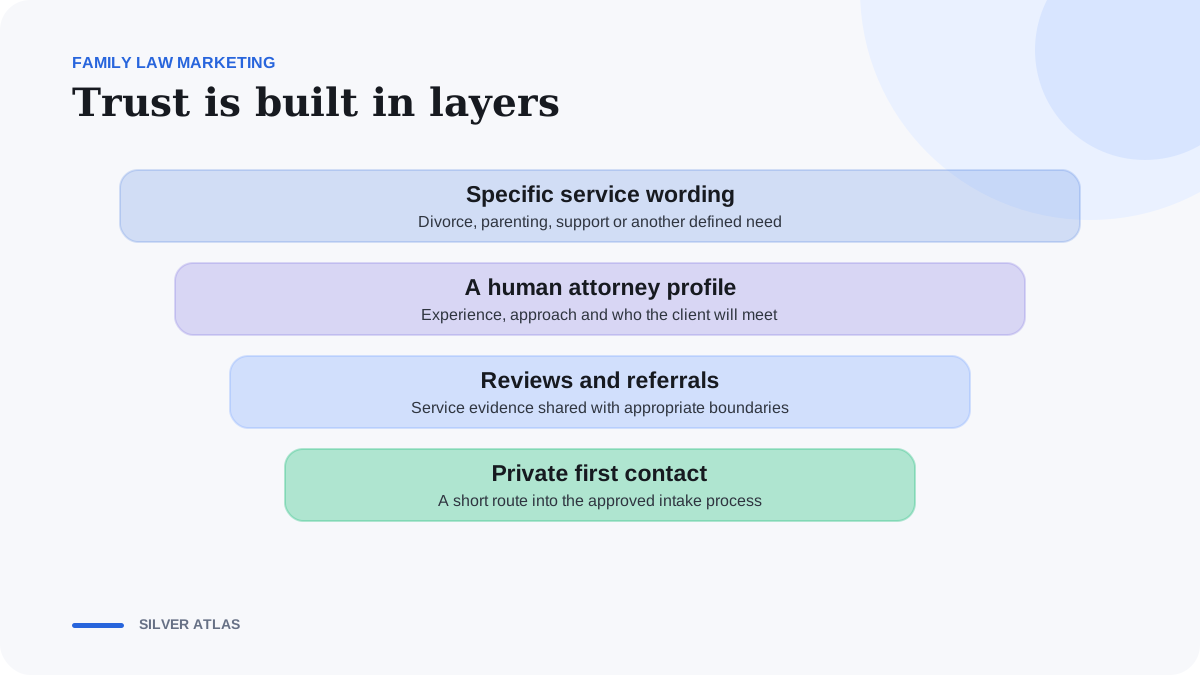
Start with the firm’s approach and the people it serves. Maybe it’s known for complex assets, practical mediation, urgent parenting advice or helping a particular community. Use the words clients and intake staff already use, not a slogan created in a boardroom.
Don’t promise everything will be fine. Explain what the firm handles, how the first conversation works and what someone can expect next.
3. Give each service a useful page
A divorce page, parenting page and financial settlement page need different answers. Copying the same paragraph across all 3 gives the visitor more work.
Create separate pages when the questions, qualification path and proof are different. Connect them through the family law marketing service rather than stuffing every topic onto the homepage. These law firm website design tips cover the page structure, mobile layout and contact route.
Use plain English beside necessary legal terms. Put the service, location and next step near the top. The visitor shouldn’t have to read the firm’s entire history before finding out whether it handles divorce.
4. Work on local search and reviews
Family law is often local. Complete the Google Business Profile, choose accurate categories, keep the firm’s details consistent and build useful service and location pages.
Reviews can help when someone is comparing firms, but family law is sensitive. Ask eligible clients through a process the firm permits. Don’t pressure anyone to reveal private details, write the review for them or edit their words into a promise.
Use genuine photos of the attorneys and office. People are deciding who they may trust with personal information. Another stock photo of a sad couple won’t tell them much.
5. Give Google Ads and SEO different jobs
Google Ads for law firms can reach people searching for a lawyer now. Start with a small number of services and locations so the budget produces something the firm can learn from.
Law firm SEO builds the service pages and supporting answers that can bring organic visits over time. The two channels can work together, but they shouldn’t become separate departments using different definitions of a useful enquiry.
Review advertising wording carefully. Google’s Misrepresentation policy prohibits misleading claims, and the firm needs to approve every service and result claim for the places it advertises.
6. Answer questions with articles and video
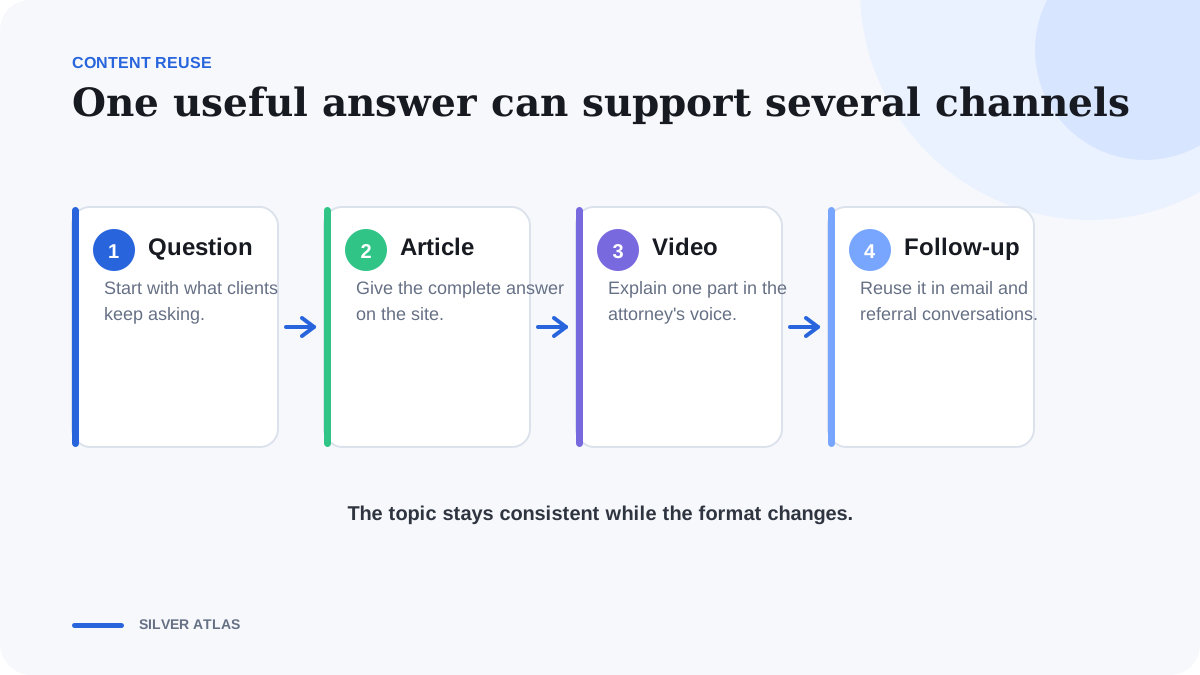
Ask the intake team what suitable prospects want to know before a consultation. What should they prepare? What happens during the first call? Does the firm offer mediation? How are fees discussed?
Choose questions people are searching for and give each article one job. Then turn the best answers into short videos, email resources or social posts. You don’t need to explain the entire law on Instagram. You need to help someone decide whether the firm and next step make sense.
Legal answers need attorney review. Use primary legal or government sources when a process or statistic needs support.
7. Build a referral network people can use
Other lawyers, accountants, financial advisers, therapists and community organisations may meet people who need family law help. Don’t just ask them for referrals. Help them understand which matters the firm handles and how an introduction works.
Stay useful. A short educational session, practical guide or thoughtful update gives someone a reason to remember the firm without turning every conversation into a pitch.
Use verified qualifications and reviews with the right context. ABA Model Rule 7.1 provides a baseline against false or misleading communications, but local rules still apply.
8. Make private contact easy
A long form can feel invasive. It can also encourage someone to type sensitive case details into a marketing system that was never meant to hold them.
Ask for enough information to route the enquiry, then move detailed facts and documents into the firm’s approved intake process. Use visible labels, a working phone link and an honest explanation of who responds.
Test the phone and form on a small screen. If the firm can’t answer outside office hours, say what happens after a message is left rather than implying an attorney is waiting at 2am.
Mobile is not an edge case. Pew Research Center found that 91% of US adults owned a smartphone in 2025 and 16% were smartphone-only internet users. That survey is not limited to legal clients, but it is a strong reason to test private contact routes on a phone.

9. Find out which marketing produced consultations
Track the source, landing page, call or form and a simple intake outcome. The marketing team needs to know whether the enquiry suited the firm, not the private facts of the family situation.
Use the lead tracking guide for law firms to connect marketing sources with outcomes such as consultation booked, wrong service, wrong location, unreachable or duplicate.
Review those outcomes with intake. If the same page keeps attracting the wrong service, fix it. If suitable enquiries aren’t booking, inspect the consultation information and follow-up before blaming the channel.
Family lawyer marketing doesn’t need more emotional language. It needs specific services, useful answers, trusted relationships and a contact route that respects what someone may be dealing with.
Common questions about family lawyer marketing
What is the best marketing channel for a family lawyer?
It depends on the firm’s location, reputation, services and budget. Local search, referrals, useful content and focused Google Ads can all work. Start with the channel the firm can support and measure properly.
Should every family law service have a separate page?
Create a separate page when the visitor’s question, service scope or consultation process differs. Don’t split closely related topics into thin pages repeating the same answer.
Does a family lawyer need social media?
Use social media when it helps the firm explain useful ideas, show its people or stay visible to referral contacts. Daily posting isn’t a requirement.
How should a family law firm judge lead quality?
Use agreed outcomes such as in scope, consultation booked, wrong service, wrong location, unreachable or duplicate. Review those outcomes with the source instead of counting every form equally.

