

Most lead tracking dashboards answer the easiest question: how many calls and forms did we get?
That’s useful, but it’s nowhere near enough. A form could be the wrong service. A 10-minute call could be a vendor. A missed call could have been the best enquiry of the week.
Lead tracking should connect the marketing source to what happened after contact. You don’t need a complicated system or a copy of the case file. You need a few source fields, a few intake outcomes and someone who’ll keep them updated.
The short version
- Separate contact events from intake outcomes and retained matters.
- Capture channel, campaign, landing page and search term where the tools permit it.
- Use a short outcome list the intake team can apply consistently.
- Keep detailed legal facts outside analytics and advertising platforms.
- Review source and outcome together so optimisation follows useful enquiries.
1. Start with the decisions you need to make
Don’t start by installing another script. Start with the decisions the firm is struggling to make. A useful system should tell the team which practice areas and locations create suitable enquiries, which campaigns and pages create repeated waste, where calls or forms fail, and which marketing changes deserve another test.
Write the questions, choose the minimum fields and decide who records each outcome. Tracking that nobody maintains is just a pile of incomplete events.
2. Stop calling every event a lead
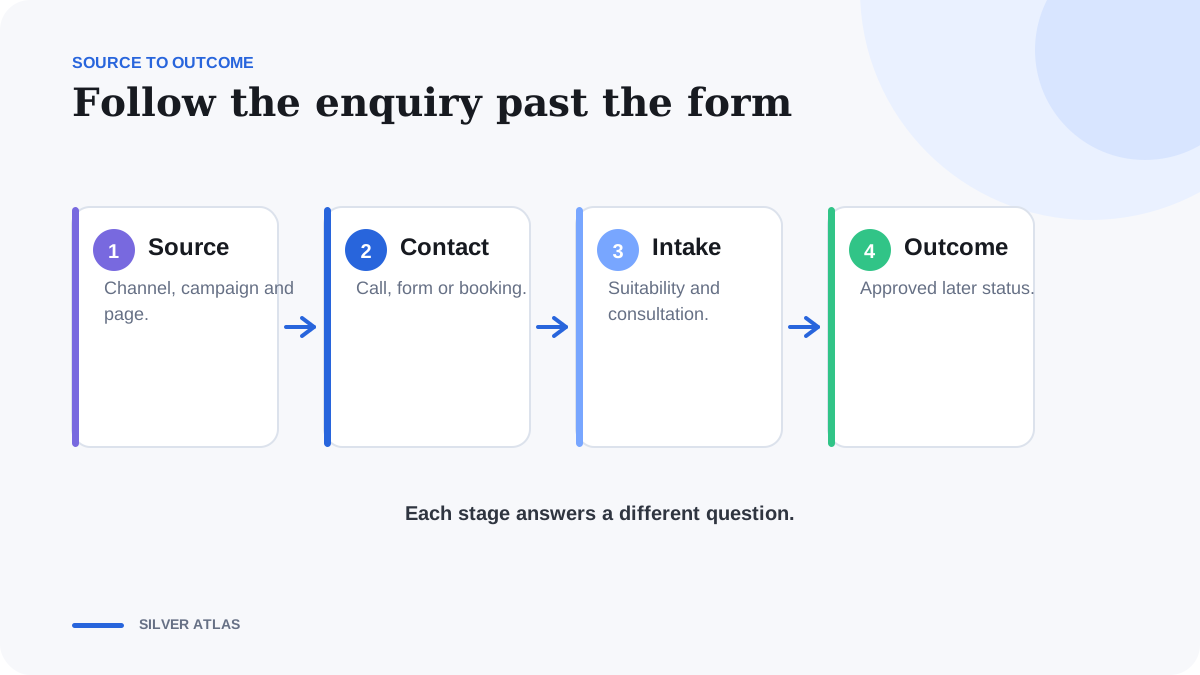
A phone-link click is an event. A form submission is an event. Neither tells you whether the person was suitable, answered or booked. A lead is a person or organisation that attempted contact. An outcome is what the firm learned after intake. A retained matter is a later commercial result with its own approval and reporting boundaries.
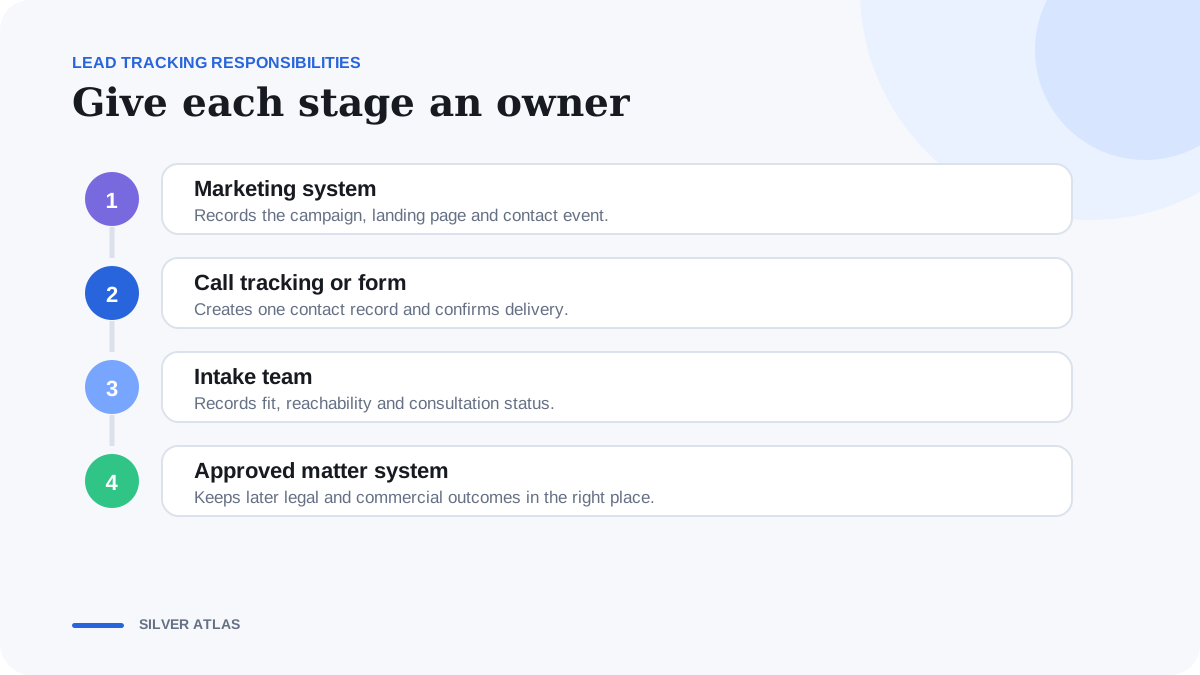
| Stage | Example | Best owner |
|---|---|---|
| Marketing event | Form submitted from a Google Ads landing page | Marketing or analytics system |
| Initial contact | Call answered and matched to the same source | Call tracking and intake |
| Intake outcome | Consultation booked, wrong service or unreachable | Intake team |
| Later result | Retained or declined after attorney review | Firm-approved CRM or matter system |
Keeping the stages distinct prevents a dashboard from calling every click a lead or every form a qualified enquiry.
3. Keep the outcome list short
If the outcome list needs a 20-page manual, nobody will use it. Keep the statuses short enough for intake to choose without a debate. A starting set might include consultation booked, in scope but not booked, needs attorney review, wrong service, wrong location, unreachable, duplicate and existing client. The exact options should match the firm’s intake process.
Document each definition in one sentence. If “qualified” means something different to marketing, intake and an attorney, the reports will never reconcile. Keep an optional private note in the approved intake system, but don’t copy sensitive facts into marketing reports.
4. Save where the enquiry came from
For website enquiries, record the channel, campaign, landing page and available click identifiers. Preserve relevant URL parameters through the form or booking journey without displaying them to the visitor. For calls, use an approved call-tracking setup that can associate eligible calls with the source while preserving the firm’s main public number where appropriate.
Attribution will never be perfect. Someone might discover the firm through SEO, return through a branded advert and later call a number they saved. Treat the reported source as evidence about the recorded journey, not a complete account of every influence.
“How did you hear about us?” isn’t enough
The question can provide useful context, but recall is imperfect and answers often use broad labels such as “Google.” Use it as a secondary field rather than replacing technical attribution. Compare discrepancies instead of forcing one source to be correct.
5. Make sure each form records once
Use a stable form identifier, meaningful field names, visible labels and one confirmed success state. Test validation and error paths, then submit the form from each important landing page. Verify the lead reaches the intended inbox or CRM and the analytics event fires once.
Keep the form short and avoid requesting confidential narratives. Link the privacy policy and explain that contact doesn’t create an attorney-client relationship. Detailed matter information should move into the firm’s approved intake process.
6. Don’t qualify calls by duration
A long call isn’t automatically a good lead. It might be the wrong matter taking 15 minutes to explain. A short call might book a consultation in 90 seconds. Record whether the call was answered, whether the caller reached the correct team and the intake outcome.
Google Ads call reporting can show details for eligible calls associated with Google forwarding numbers. The platform record still needs the firm’s outcome if decisions are meant to follow case fit rather than call volume.
7. Connect later outcomes when the process is ready
When the firm is ready, later outcomes such as a qualified consultation or retained matter can be connected to the original campaign through an approved offline measurement process. Choose the stage that is recorded consistently and occurs often enough to inform decisions.
Google explains that enhanced conversions for leads can use hashed first-party data to support offline attribution. Implementation still requires consent, privacy review, accurate field mapping and testing. Hashing doesn’t remove the responsibility to collect and use data lawfully.
8. Build a report people can act on
Show enough of the journey to explain a decision: spend, relevant clicks, contact events, answered contacts, intake outcomes and later approved results. Break the evidence down by practice area, location, campaign and page only when the data is sufficient and the categories remain stable.
Don’t label Google Ads conversion value as verified revenue unless it’s actually reconciled with the firm’s commercial records. Keep platform values, estimated values and confirmed fees separately named.
Clio’s 2024 secret shopper study found that phone contacts included rate information 41% of the time, process or next steps 36%, and total cost estimates 12%. Email replies included steps or cost information 18% of the time.

9. Get the intake team in the room
Marketing shouldn’t review this alone. The people answering the calls know which campaigns are producing useful conversations and which ones are wasting their time. Ask which searches and pages created suitable conversations, which messages caused repeated misunderstanding, where follow-up stalled and which services have capacity next month.
Use the answers to make a small number of traceable changes. Law firm Google Ads can use the feedback to refine search themes and conversion priorities. Law firm SEO can use it to improve service pages and choose supporting topics. Both channels need the same outcome definitions.
10. Keep ownership simple
The firm should retain appropriate access to advertising, analytics, call-tracking and intake systems. Document who owns each account, where billing sits, who can export data and what happens if a provider changes.
Silver Atlas can configure and report on those systems without creating an unnecessary private backend that traps content or lead data. The best architecture is the least complicated one that meets the firm’s security, privacy and reporting needs.
11. Test the whole thing before trusting it
- Agree the priority services, locations and outcome definitions.
- List every call, form and booking route on the site.
- Test delivery and one-time event firing for each route.
- Confirm source fields survive the landing-page and booking journey.
- Assign an owner for intake outcomes and missed-contact follow-up.
- Reconcile a sample of marketing records with the approved intake system.
- Document account access, privacy boundaries and reporting names.
- Schedule the first source-and-outcome review before launch.
The best lead tracking setup is usually boring. It records the source, records the intake outcome and gives the team enough information to decide what to change. That’s the job.
Common questions about law firm lead tracking
What is the minimum useful setup?
Track the original channel and landing page for each call or form, then add one consistent intake outcome. That is enough to begin separating useful demand from raw volume.
Should call duration count as a qualified lead?
No. Duration is a technical signal, not a legal or commercial assessment. Use an intake outcome to determine whether the call matched the firm’s service.
Can a law firm send outcomes back to Google Ads?
Yes, through an appropriate approved setup such as enhanced conversions for leads. The firm needs accurate identifiers, consent and privacy review, stable outcomes and technical validation before relying on the data.
How often should tracking be audited?
Check delivery and event firing after every form, site, tag or routing change. Review source-to-outcome patterns regularly, with a monthly cross-team review as a practical starting cadence.
