

Trying to work out how to market a law firm can get messy fast.
One person tells you to post on social media every day. Someone else says SEO is the only answer. Then an agency wants to launch Google Ads before asking which matters you actually want.
I’d start somewhere less exciting: decide what work the firm wants, who it wants that work from and why someone should choose it. The channels come after that.
The short version
- Choose the matters, locations and clients the firm wants before choosing a channel.
- Build useful service pages around the questions people are already asking.
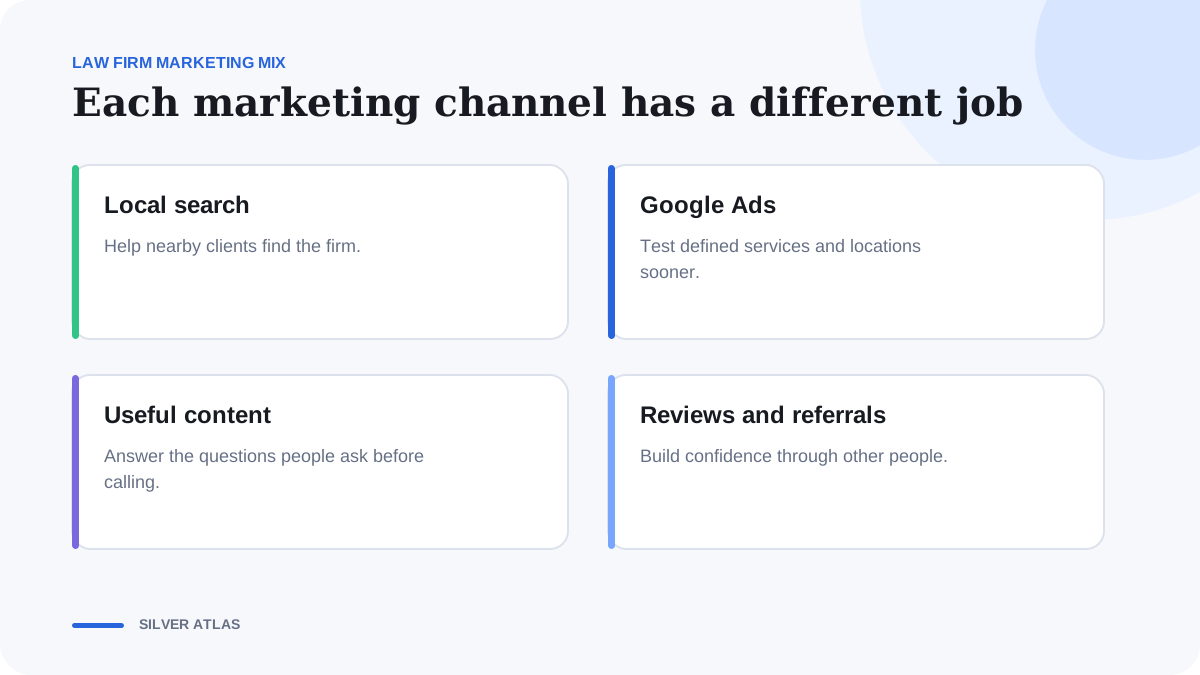
- Use local search, Google Ads, content, reviews and referrals for different jobs.
- Make it easy for someone to contact the firm and know what happens next.
- Track consultations and suitable matters, not calls and forms alone.
1. Decide which matters you actually want
“More cases” isn’t a marketing brief. It’s how firms end up paying for enquiries they never wanted.
List the work the firm can take now, the places it serves, what it doesn’t handle and what makes an enquiry worth taking. A family firm might want privately funded divorce and parenting work in 3 counties. A criminal defense firm may want more DUI matters but not court-appointed work. Those are very different marketing jobs.
Do this before touching Keyword Planner. Seriously. It shapes the law firm marketing strategy, website, adverts and intake questions.
2. Give people a reason to remember the firm
Most firms say they’re experienced, dedicated and client-focused. So does everyone else.
Think about what the firm wants to be known for. It might be a particular type of matter, a community it already serves, a language the team speaks, the way consultations work or the depth of experience in one area. Whatever it is, it has to be true and useful to the client.
This doesn’t need a clever slogan. It needs a specific answer to 3 questions: who do you help, what do you help them with and why might your approach suit them?

3. Build pages around what people are searching for
Someone searching “divorce lawyer near me” isn’t asking the same question as someone searching “how is property divided in divorce.” The first person is comparing firms. The second is researching a problem. Both searches can matter, but they shouldn’t be forced onto one page.
Give each important service its own useful page when the visitor’s question, proof or consultation route is different. Then publish articles answering researched questions around that service. The law firm website design guide explains what those pages need once someone lands on them.
Don’t publish 30 articles because a content calendar says Tuesday is blog day. One good service page and 3 articles people are actually searching for will do more than a pile of generic legal commentary.
4. Get the local basics right
For many firms, local visibility is the quickest place to find obvious gaps. Complete the Google Business Profile, use the correct categories, keep the firm’s name, address and phone details consistent and add services the firm genuinely provides.
Ask eligible clients for reviews using a process the firm and its jurisdiction permit. Don’t buy reviews, write them for clients or turn one good outcome into a promise about the next matter.
Local SEO also needs useful location and service pages. A city name pasted into the same paragraph 20 times won’t make a page useful. Write for the questions, court areas and consultation process that genuinely change by location.
5. Use Google Ads when the firm needs demand sooner
Google Ads for law firms can put the firm in front of people already searching for a lawyer. That makes it useful for testing a defined service and location without waiting for organic rankings.
It can also waste money at an impressive speed. Start with a small number of matters, use a page matching the search and review the search terms. Don’t spread a modest budget across every service the firm has ever handled.
The advert and page still need honest wording. Google’s Misrepresentation policy prohibits misleading claims, and the firm needs to approve the final wording under the rules where it practises.
6. Use SEO and content to answer the next question
Law firm SEO starts with pages for the services people may hire the firm for. The blog supports those pages by answering the questions people ask before they call.
Talk to the intake team. What do suitable prospects ask every week? What confuses them? What do they need to prepare for a consultation? Those questions are usually better starting points than a list of broad legal topics copied from another firm.
Not every answer needs to be an article. A short video, webinar, email or downloadable checklist may suit the question better. You can reuse one useful explanation across several channels without pretending every platform needs original daily content.
The same channel can be common and still be badly used. The ABA’s 2024 Legal Technology Survey found that 90% of respondents had a firm website and 80% used social media for marketing. That is adoption evidence, not a reason to copy another firm’s mix.

7. Don’t ignore reviews, referrals and relationships
Search isn’t the only way people choose a lawyer. Former clients, other attorneys, accountants, community groups and professional networks can all introduce suitable work.
Make the referral route easy. Explain which matters the firm handles, who the right contact is and what happens after an introduction. Stay in touch by being useful, not by sending a monthly email nobody asked for.
Use verified reviews and credentials where they help someone judge the service. ABA Model Rule 7.1 is a useful starting point for avoiding false or misleading communications, but the firm still needs jurisdiction-specific review.
8. Make contacting the firm easy
Marketing can’t fix an unanswered phone. I’ve seen good campaigns blamed for leads that sat in voicemail or never received a second call.
Use a working click-to-call link, a short labelled form and an honest explanation of what happens next. Test them on a small phone. If the site says someone answers 24 hours a day, the firm must be able to support that claim.
Ask only for enough information to route the enquiry. Detailed legal facts belong in the firm’s approved intake process, not in analytics or a general marketing form.
9. Track what became a useful conversation
A call or form only proves someone made contact. It doesn’t prove the enquiry suited the firm.
Record the source, campaign and landing page where available, then add a simple intake outcome such as consultation booked, wrong service, wrong location, unreachable or duplicate. The law firm lead tracking guide shows how to set this up without copying private case details into marketing reports.
Review the results each month. Put more time or budget into the channels producing suitable conversations. Repair repeated misunderstandings. Stop paying for demand the firm doesn’t want.
That’s how I’d market a law firm. Start with the work, choose a few ways to reach the right people and let intake tell you whether the marketing did its job.
Common questions about marketing a law firm
What should a small law firm do first?
Choose 1 or 2 priority services, improve the matching pages, complete the local search basics and make sure calls and forms reach someone. Add more channels after the firm can judge the enquiries it already receives.
Does a law firm need social media?
Not every firm needs to post every day. Use social media when the audience, referral network or type of advice suits it. A useful monthly video can be more valuable than daily filler.
Should a law firm use SEO or Google Ads?
Google Ads can test demand sooner. SEO builds visibility and useful website assets over time. The SEO vs PPC for law firms guide explains when I’d start with each one.
How should a firm judge its marketing?
Track spend and enquiry volume, then connect them to consultations and suitable matters. Rankings, clicks and form counts help with diagnosis, but they don’t tell you whether the firm got the work it wanted.