

SEO vs PPC usually gets framed as a fight. Which one is better? Which one should get the budget?
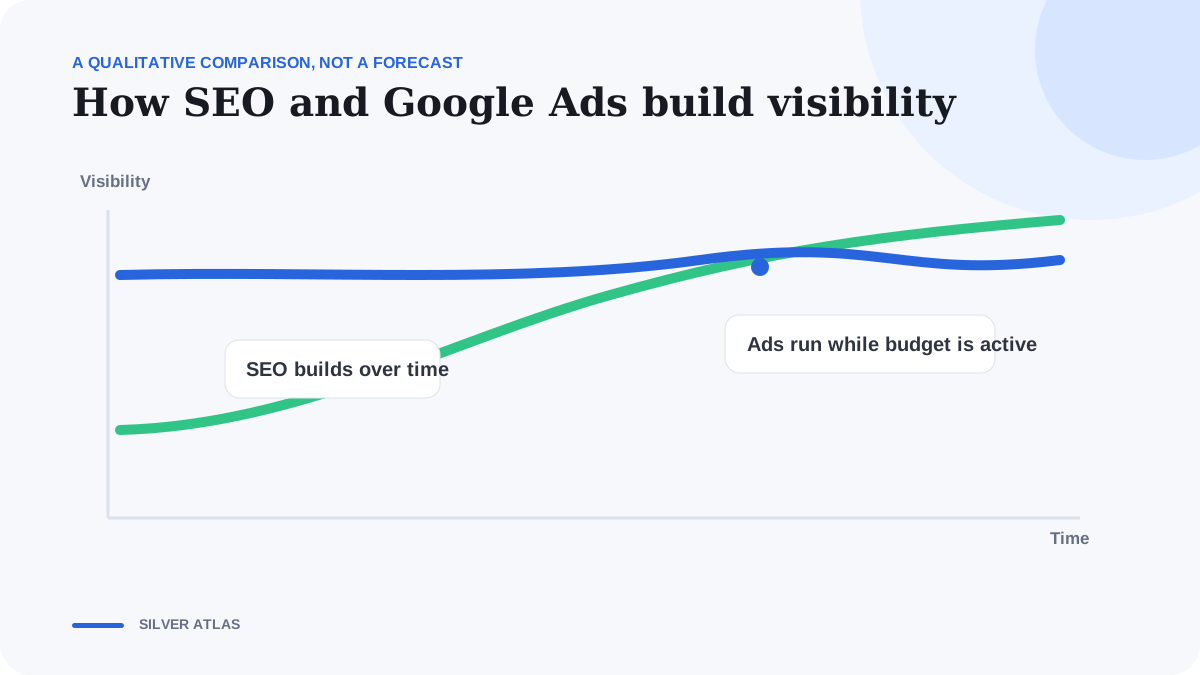
For most law firms, that’s the wrong question. Google Ads can put the firm in front of people searching now. SEO builds the pages and authority that can bring those searches in later without paying for every click.
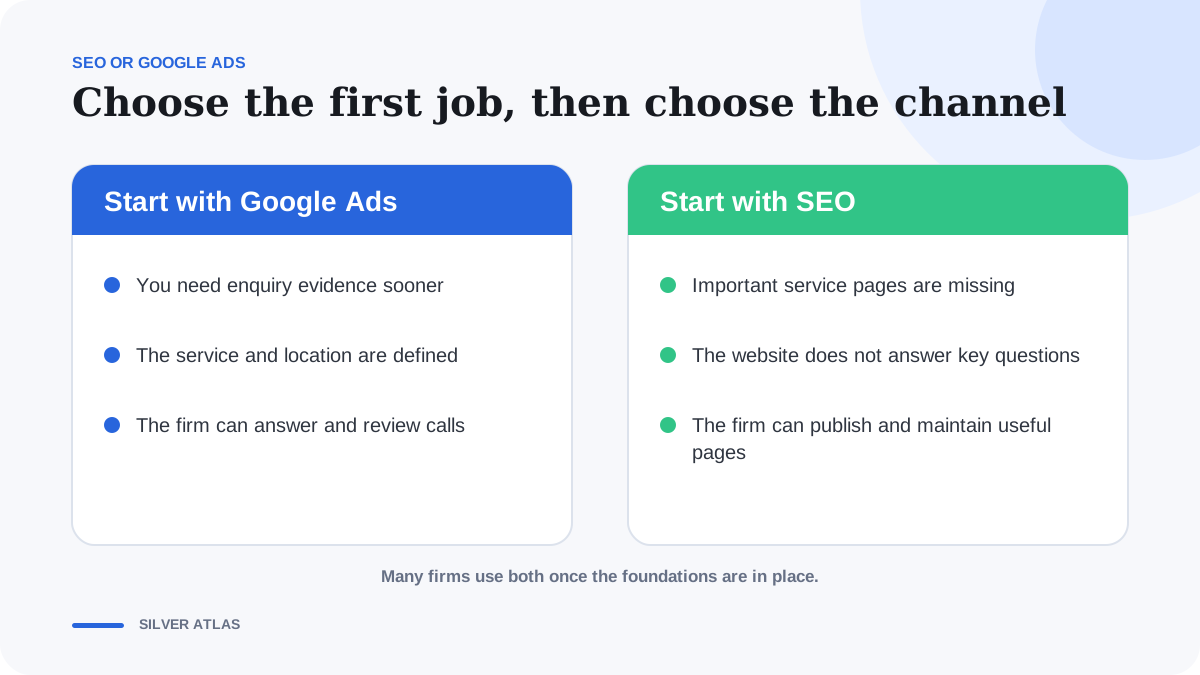
If you need enquiries sooner and the website can convert them, I’d usually test Google Ads first. If the site barely explains the services, fix that before sending paid traffic anywhere.
The short answer
- Start with Google Ads when the firm needs a controlled demand test and can support the enquiries now.
- Start with SEO foundations when the website has missing, thin or competing service pages.
- Use the same service priorities, landing pages and intake outcomes across both channels.
- Judge the first 90 days by what the firm learns about useful demand, not rankings or clicks alone.
| Decision factor | Google Ads | SEO |
|---|---|---|
| Primary job | Test and capture defined search demand | Build durable service and topic visibility |
| Control | Budget, location, timing and search themes can change quickly | Page quality and site structure are controlled; ranking timing isn’t |
| Early evidence | Search terms, clicks, calls, forms and intake outcomes | Indexing, impressions, page engagement and early enquiries |
| Main risk | Paying for broad or poor-fit demand | Publishing thin pages without a useful topic plan |
| Asset created | Campaign learning and conversion data | Improved pages, internal links and content coverage |
What are you trying to find out?
Say a criminal defense firm wants more work for 1 charge type in 3 counties. It doesn’t need a 40-page content plan on day 1. It needs to know whether those searches produce suitable calls. That is a demand test. A family law firm with one generic service page may first need separate divorce, parenting and financial-matter pages. That is a website and topic-coverage problem.
Write the 90-day question in one sentence. Examples include: “Can this service generate privately funded consultations in these counties?” or “Can the site establish a useful group of pages around this practice area?” A channel is easier to select when its job is specific.
Start with Google Ads when you need evidence sooner
Law firm Google Ads is the stronger first test when the firm has a defined service, an approved location, capacity to respond and a relevant destination page. It can expose the offer to high-intent searches without waiting for organic rankings.
Faster doesn’t mean safer. A broad campaign can burn through the budget teaching you that people search for all kinds of matters the firm never wanted. Build focused ad groups around one hire-ready intent, keep search terms under review and use negative keywords to exclude obvious mismatches. The ad and page should use the same service language.
Don’t launch until these basics work
- A written definition of the matters and locations in scope.
- A landing page that explains fit, exclusions and the consultation step.
- A working call and form route tested on mobile.
- Outcome labels that distinguish useful enquiries from raw conversions.
- A budget boundary and review date agreed in advance.
Google describes landing page experience and ad relevance as components of ad quality. Its Quality Score guidance is useful for diagnosis, but Quality Score isn’t proof that a campaign is producing suitable matters. Intake evidence still decides whether the traffic deserves more investment.
Start with SEO when the website is the problem
Law firm SEO should lead when the website can’t yet support the service properly. Missing practice-area pages, several URLs targeting the same intent, weak internal links, slow pages or hard-to-find contact routes affect organic search and reduce the value of future paid traffic.
Start by mapping the current site. Give each useful URL one primary intent and identify the commercial pages the firm needs before planning blog topics. A guide should support a service page, not compete with it. The law firm marketing guide shows how commercial pages, supporting articles and intake feedback fit together.
What I’d work on first
- Resolve technical barriers that stop important pages being crawled or used.
- Create distinct service pages where the visitor’s question is genuinely different.
- Publish guides that answer researched questions with original experience and primary sources.
- Link hubs, services and guides in a way that helps people move to the next answer.
- Measure suitable organic enquiries, not traffic growth in isolation.
SEO takes longer. Anyone promising the firm a ranking date is guessing because indexing, competition and the site’s existing authority all matter. Avoid promising a ranking date. Set delivery milestones the team can control, then monitor search visibility and enquiry quality as evidence develops.
More firms owning websites also means a bare website is not a differentiator. The ABA reported that solo-firm website presence rose from 53% in 2021 to 70% in 2024. A useful SEO plan still needs distinct pages, good answers and a working intake route.

Most firms will end up using both
Use both when the firm has enough capacity, budget and feedback discipline to keep the channels coordinated. Google Ads can test high-intent language and reveal recurring search terms. SEO can turn validated demand into stronger service pages and supporting resources. Better organic pages can also become better paid destinations.
The channels shouldn’t run as separate reports. Use one practice-area priority list and one set of intake outcomes. If paid search calls a lead qualified while the intake team calls the same enquiry out of scope, the measurement definition needs repair.
Here’s what that looks like
Suppose a firm wants more estate planning work. Ads may begin with focused searches for wills and trusts in serviceable locations. The site may need distinct pages that explain each service and a guide comparing common planning routes. Search-term and intake evidence can then shape the next organic page, while the improved page gives paid visitors a more relevant answer.
A smaller budget means a smaller test
If the budget is small, don’t spread it across 6 services and 20 locations. That usually produces a lot of activity and very little you can learn from. It’s a reason to narrow the question. One focused service in a realistic location usually teaches more than several thin campaigns. SEO likewise needs enough resource to finish a useful group of pages rather than starting many drafts.
Include hidden costs in the plan: landing-page work, tracking, call handling, content review and follow-up. A campaign budget without an intake plan can produce activity the firm can’t use. An SEO budget without legal and factual review can produce pages that never become publishable.
What I’d do in the first 90 days
Days 1 to 30: foundations
Define the priority matter, audit current pages, test contact routes and agree outcome labels. Repair the destination page before increasing traffic. For SEO, map the hub, service and supporting-guide structure. For Ads, build narrow campaign themes and exclusions.
Days 31 to 60: evidence
Review paid search terms and intake outcomes every week. Publish or improve the first high-value organic pages and confirm they are indexed. Record questions that useful prospects ask so those answers can improve the service pages.
Days 61 to 90: allocation
Compare the evidence with the original question. Scale only the paid themes that produce suitable conversations. Continue SEO topics that support verified demand. Stop work that is generating volume without commercial fit and document the next test.
There isn’t a universal winner here. Pick the first question you need answered, give the channel enough time and budget to answer it, then use the intake results to decide what happens next.
Common questions about SEO and Google Ads for law firms
Is Google Ads faster than SEO?
Ads can reach eligible searches soon after launch, while organic visibility usually takes longer. Faster exposure isn’t the same as faster profit. The campaign, page, tracking and intake path all need to work before the evidence is useful.
Does SEO reduce the need for Google Ads?
Strong organic visibility may reduce paid dependence for some searches, but the channels occupy different parts of the results and can support different tests. Decide by service, location, capacity and measured case fit rather than assuming one channel replaces the other.
Should a new law firm run both immediately?
Only if it can fund and operate both properly. A new firm often learns more by establishing a trustworthy website and running one controlled demand test than by spreading effort across every channel.
What should both channels report?
Report visibility and cost, then connect calls and forms to intake outcomes such as consultation booked, in scope, wrong service or unreachable. The shared outcome layer is what lets the firm compare channels fairly.